


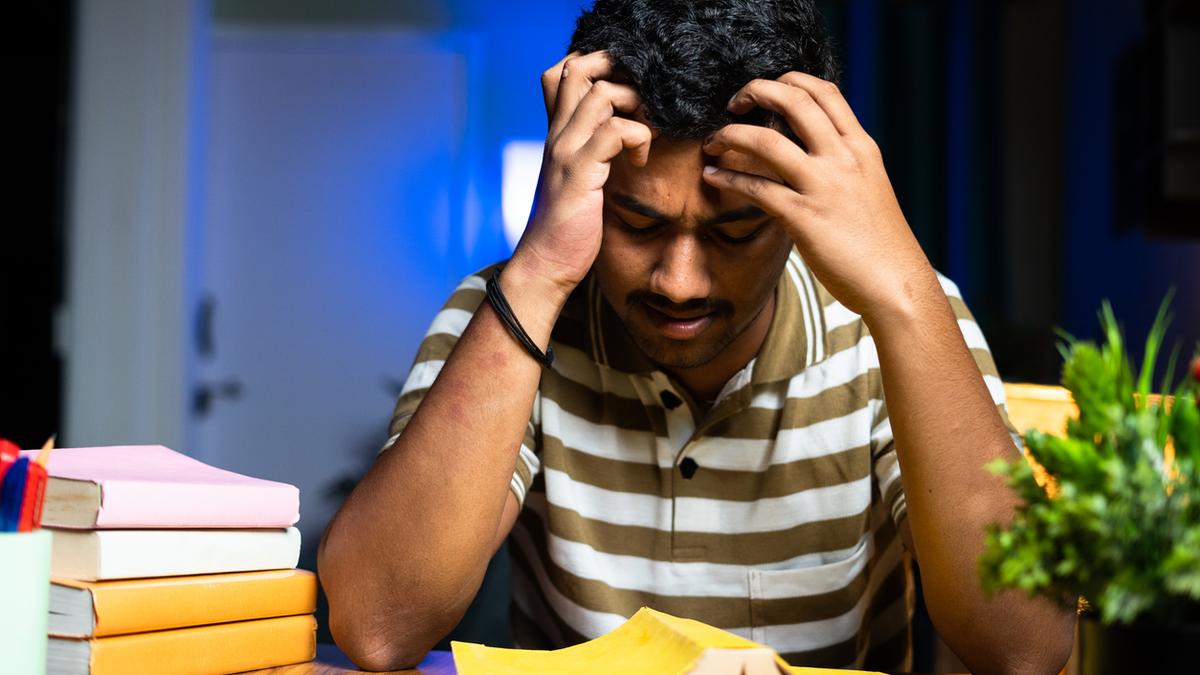
Every year, as board exams approach, a familiar scene unfolds across India. Teenagers are buried under the textbooks and tuition notes, parents talk anxiously about marks, and schools extend classes late into the evening. What should be a milestone in learning often turns into a season of stress for students, families, and teachers as well.
Parents are also anxious about board exams; cut-offs are discussed in WhatsApp groups, and comparison is often indirect. Families also spend a great deal of money on coaching and tuition and reorganise schedules to make time for study and practice. When parents observe changes in their children’s mood, appetite, and sleep patterns, they become concerned about their mental health.
Board examinations hamper student participation in sports, arts and hobbies. Students sacrifice extracurricular activities and focus on exams, which restricts their ability to experiment, fail safely, and follow interests outside the classroom. This pressure to perform, instilled in students from such a young age, makes it difficult for them to separate learning from being tested.
What’s been done?
This year, in order to give enough time for board exam preparation, the Central Board of Secondary Education (CBSE) released the date sheet for the examinations 110 days before the start of the examinations.
In a bid to reduce the stress of critical board exams, Class 10 students will also be given the option of taking their exams twice, the CBSE said on Wednesday (June 25, 2025). This option to improve performance in up to three academic subjects will only be provided to students who pass the first examination. The Rajasthan School Education and Panchayati Raj Minister, Madan Dilawar, also made a similar announcement. From the academic session 2026-27, the Rajathan board will conduct examinations twice a year for class 10 and 12 board students.
The CBSE had also introduced two levels in the Class 10 Mathematics exam in 2020, aiming to reduce exam pressure and provide students with options aligned with their interests and career plans. The Central Board of Secondary Education (CBSE) announced open-book examinations for students of Class 9 as part of internal assessment from 2026 - 27. These decisions are in line with the 2020 National Education Policy’s recommendation to remove the ‘high stakes’ aspect of board exams.
The bigger picture
Parents need to redefine success. A score of 70% or 80% is not a failure; it is a snapshot of a moment, not a definitive measure of one’s lifelong abilities. They should help children strike a good balance. Also, they should foster mental well-being and notice stress indicators.
Introducing board exam concepts early in life, one might get a good college but not confidence, originality or humaneness. Some things are more important than marks. Learning under constant pressure may make students see short-term gains. Only when they learn in a supportive and well-balanced environment do their resilience, hope, and character develop.
Published - December 17, 2025 05:30 pm IST

