

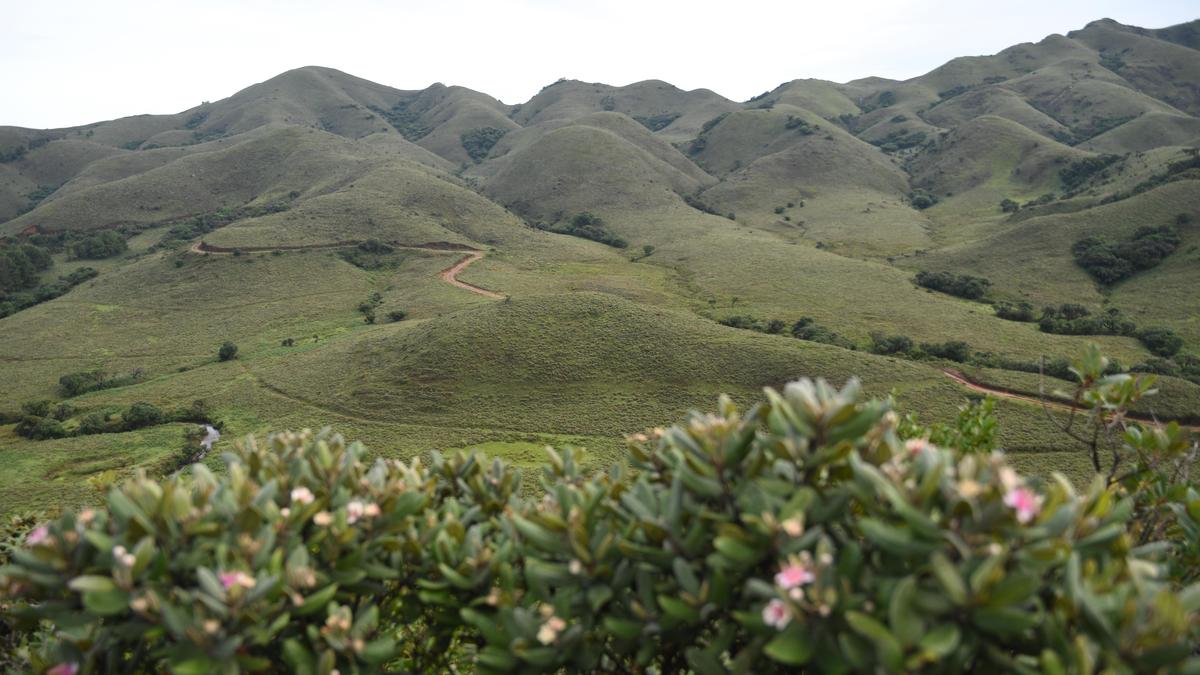
The Western Ghats are one of India's most iconic landscapes, but most people seem to think of them as lush, evergreen forests dotting the mountains. Actually, this biodiversity hotspot has several other ecosystems, one of which is found nowhere else in the world. Today, these unique ecosystems and their distinctive biodiversity are threatened by mining, agricultural expansion, and the construction of road infrastructure. If we lose these, we lose a part of India’s natural identity.
Sholas: Tamil Nadu, Kerala and Karnataka
A picturesque rolling patchwork of grasslands and forests, the sholas are a unique ecosystem found in South India. The name is derived from a local word for rainforest! The habitat changes drastically with altitude, as dense forests at the foothills and valleys give way to the open grasslands near the peaks. This sharp transition comes with a distinct biodiversity. Some endemic species, such as the dainty blue Nilgiri Sholakili and the majestic Nilgiri Tahr, are found nowhere else in the world.
Lateritic Plateaus: Mainly Maharashtra and Goa

A magical transformation during the rains: the Kaas Plateau in Maharashtra | Photo Credit: The Hindu Archives
These flat tablelands look desolate and dull in summer and winter. But, during the rains, they transform into a spectacular and colourful world. Maharashtra’s Kaas Plateau is a world-famous example of Lateritic Plateaus. Here, the Smithia hirsuta — aptly called Mickey Mouse flowers — and the vibrant magenta Impatiens turn the plateau into a stunning “valley of flowers”. As the thin red soil lacks nutrients, some plants such as Sundew and Bladderworts obtain nutrients by consuming insects! In Goa, the stately white Haebaneria orchids are joined by Dipcadi Goaense flowers, found nowhere else in the world! Small pools that form on these plateaus when it rains are a vital breeding ground for some of India’s rarest amphibians, such as the Amboli toad.
Myristica Swamps: Karnataka, Kerala, Goa
These swamps are one of the most primitive habitats in the country. | Photo Credit: The Hindu Archives
These damp swamps, characterised by water-loving Myristica trees and their air-breathing roots, are like no other in India. The tangled branches, thick canopy, and waterlogged soil create a mysterious atmosphere. Found almost exclusively in the Western Ghats, these are one of the most primitive habitats and harbour interesting creatures like the Myristica Bambootail Damselfly (found only in this ecosystem), Dancing Frogs, Hump-nosed Pit Vipers and many freshwater crabs.
Moist Deciduous Forests: Karnataka, Kerala, Goa, Tamil Nadu, Kerala
The elusive Nilgiri Marten (Martes gwatkinsii) is found in the moist deciduous forests of the Western Ghats | Photo Credit: The Hindu Archives
Apart from evergreen forests, the Western Ghats host moist deciduous forests, where the trees shed their leaves seasonally. Typical trees include the sturdy teak and the red silk cotton with its lovely flowers. The iconic tiger, the imposing Gaur, the agile Nilgiri Marten, the endangered Nilgiri Langur, the noisy White-bellied Treepie and the elegant Grey-fronted Green Pigeon are some of the wildlife found here.
Published - January 09, 2026 10:00 am IST

