


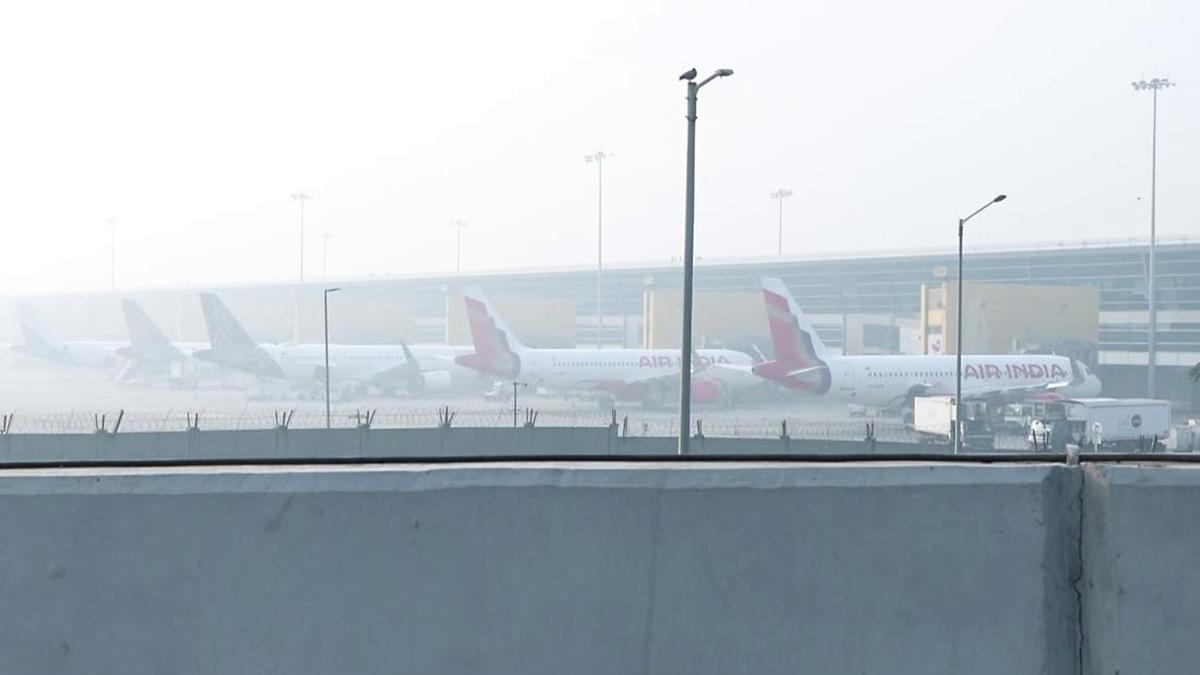
A: In weather science, ‘visibility’ is a colloquial term for a quantity called the meteorological optical range. It’s defined as the distance a beam of light can travel through the atmosphere before its intensity drops to 5% of its original value.
In an older time, a human observer would stand at a point and look for predetermined landmark objects at known distances, e.g. a water tower at 1 km and a temple at 5 km. If the observer can clearly distinguish the object against the skyline, the visibility is at least that distance. At night, they used lights of known intensity.
Modern weather stations use sensors to measure the visibility. In the direction version, a transmitter shoots a laser beam at a receiver located a specific distance away (often 20-75 m). The receiver measures exactly how much light made it across. In the indirect version, a transmitter projects a beam of light past a receiver, not directly at it. If the air is clear, the receiver sees nothing; If there’s fog or dust, the particles scatter the light, deflecting some into the receiver. The amount of scattered light is converted into a visibility distance.
The India Meteorological Department also classifies visibility depending on smog (i.e. smoke + fog) intensity. This scheme ranges from 500-1,000 m for ‘shallow fog’ to less than 50 m for ‘very dense fog’. On January 18, the visibility in Delhi had dropped to ‘poor’, i.e. 50-200 m.
Published - January 18, 2026 10:53 am IST

