


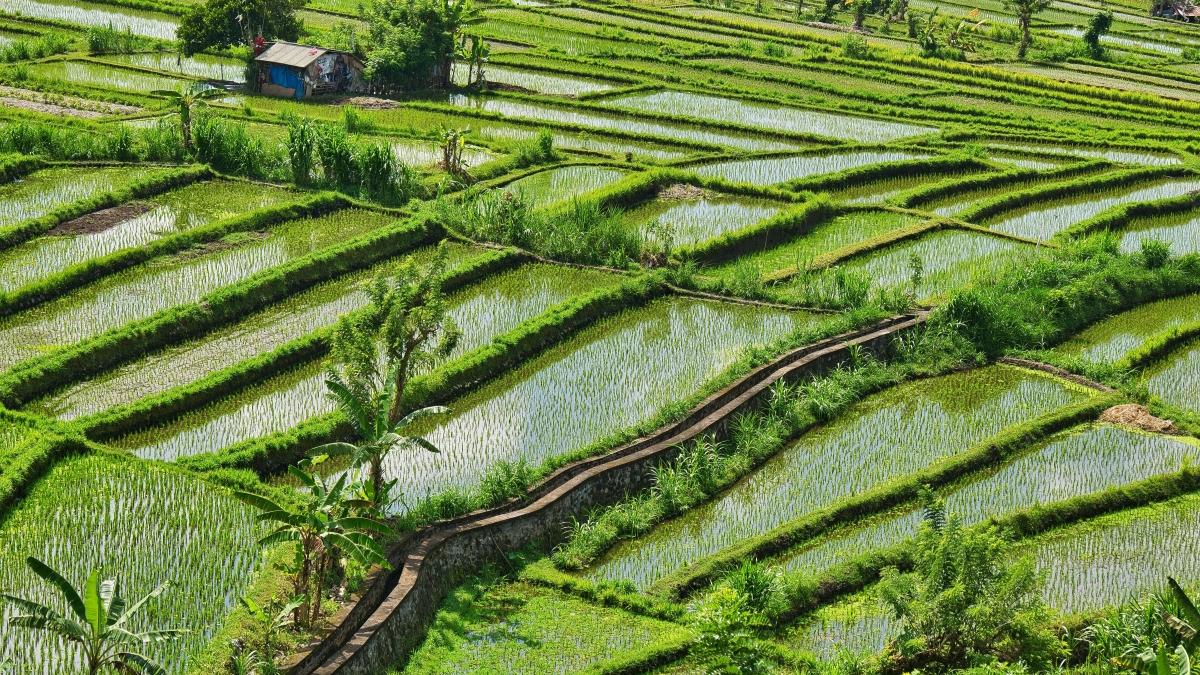
A: Many rice-growing systems deliberately flood the fields and most of the water is lost to the air or to the ground. Farmers often maintain shallow flooding to stabilise some nutrient dynamics. In many paddies, water also moves sideways or down the soil unless the field is rich in clay or well sealed. Flooding is an easy way to meet these goals but also expands the exposed water surface, so the total water demand rises.
Second, the plant needs CO2 inside the leaf for photosynthesis. CO2 enters primarily through open stomata, but the same open pores also allow water vapour to leave. Third, rice is a C3 plant, and C3 photosynthesis is less water-efficient in hot or dry conditions than C4 (e.g. maize). In C3 plants, the main CO2-fixing enzyme sometimes reacts with oxygen instead of CO2. To keep photosynthesis going, C3 leaves often need to keep stomata open enough to sustain internal CO2 levels, which increases transpiration.
Finally, flooded soils are oxygen-poor because oxygen diffuses slowly through water. Most crops’ roots struggle in these conditions. Rice is tolerant, however, because it develops air-filled channels that move oxygen from the shoots to the roots.
Published - January 21, 2026 08:00 am IST

