


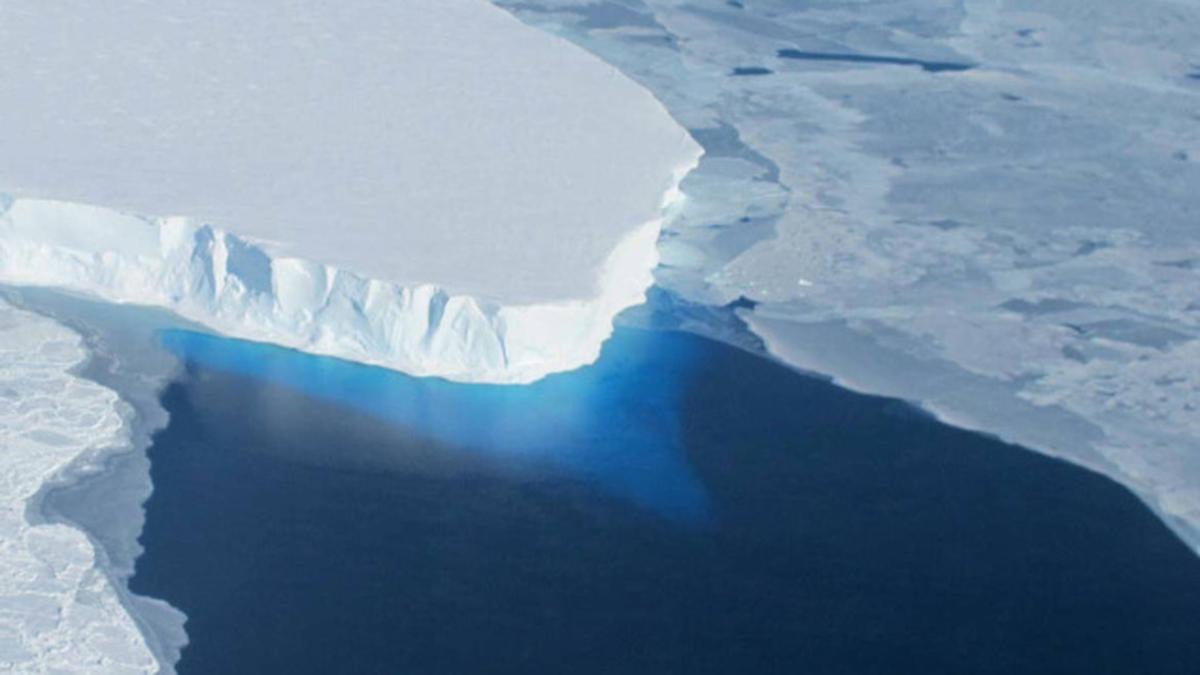
A: Thwaites glacier is a large glacier in West Antarctica, about the size of a large country. Scientists have often called it the “Doomsday Glacier” in the media. It is one of the most important places on the earth for those trying to understand how sea levels will rise in future.
The glacier sits on land that slopes downward as you go further inland, dipping below sea level. This is important: warm ocean water is known to flow under the glacier’s floating edge, i.e. its ice shelf, and melt it from below. As a result, the ice shelf acts like a brace, like a doorstop, that slows the glacier’s flow into the ocean. As the ice shelf becomes thinner or breaks in places, the glacier speeds up and loses more ice.
Scientists’ studies have revealed that the glacier is already changing: it has been becoming thinner, retreating, and contributing to sea-level rise. If Thwaites were to collapse completely over a long period, it could cause global sea levels to rise by around half a meter.
Thwaites is also holding back ice nearby in the West Antarctic Ice Sheet. If it weakens beyond a point, other glaciers may lose ice faster as well, further increasing sea-level rise. Higher sea levels will cause coasts to flood more easily, worsen erosion, increase storm surges, and threaten cities, low-lying islands, and ports. While Thwaites is far from most lived areas, how it changes will affect people worldwide.
Published - February 08, 2026 03:17 pm IST

