


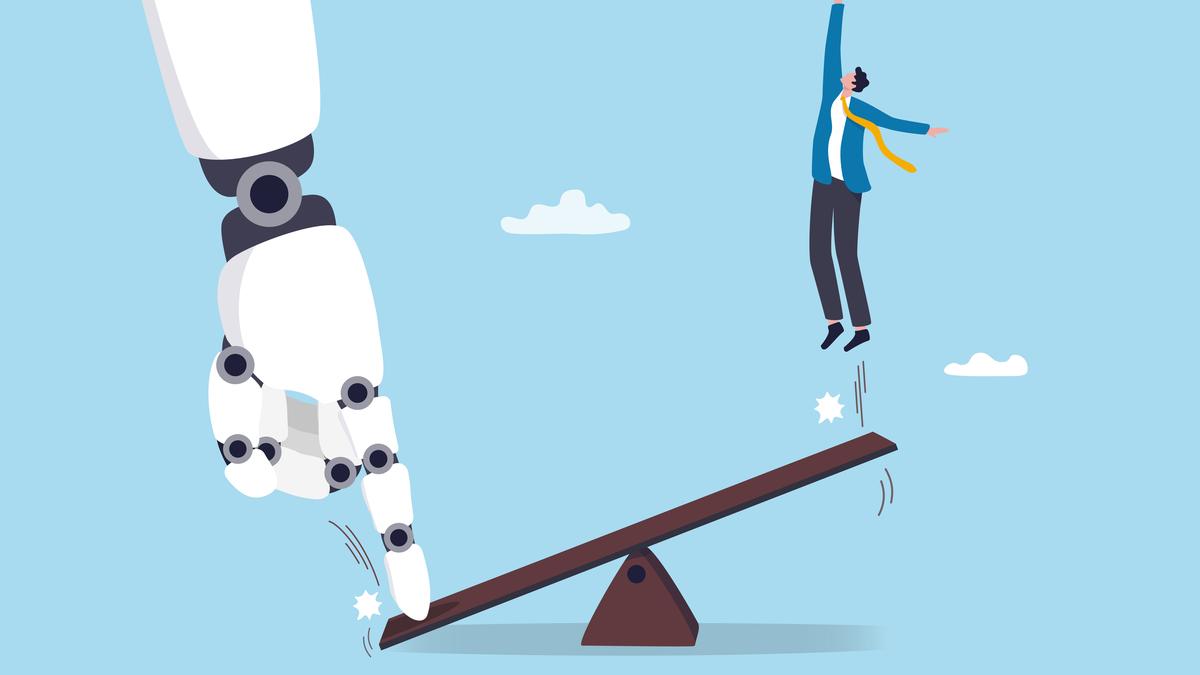
Artificial Intelligence (AI) delivers what machines have always excelled at: repetitive, rule-based tasks executed at inhuman speed and scale. A skill is, by definition, learnable and repeatable. If it can be systematised, documented, and taught to one person, it can eventually be taught to an algorithm. Coding, data analysis, financial forecasting, legal research, and medical diagnostics — technical competencies once considered highly specialised — now face automation pressure. This is not dystopian; it is inevitable and, ultimately, liberating.
What machines cannot do or what no algorithm can replicate is thinking. Not processing, but thinking. Not pattern-matching, but meaning-making. Not optimisation, but imagination. Critical thinking remains distinctly human. Machines can only summarise what we know, but humans can imagine what we don’t. Ethical reasoning, the capacity to navigate moral complexity and make decisions grounded in values rather than mere data, requires lived experience and empathy that no code can generate. Adaptability also emerges from understanding context, culture, and the messy unpredictability of the real world. These cognitive capabilities cannot be automated because they are not mechanical. They are human.
This is precisely where education plays a pivotal role. Since skills alone can be automated, an education system focused narrowly on skill acquisition risks preparing students for a world that no longer exists. The real challenge, and opportunity, lies in nurturing thinkers: individuals who can connect ideas across domains, ask better questions, interpret nuance, and apply judgment in real-world contexts. This approach of an interdisciplinary education model, along with experiential learning, will be central to preparing our students and future leaders for an AI-driven world.
Interdisciplinary learning
Many mistake interdisciplinary learning with simply studying multiple subjects; however, it is much more than that. It is about learning to integrate multiple perspectives. The most complex challenges of our time — climate change, public health, digital ethics, economic inequality, or the future of work — sit at the intersections of technology, society, policy, culture, and human behaviour. An interdisciplinary education model equips students to navigate these intersections with intellectual agility. When a student trained in economics engages deeply with sociology, psychology, design, or data science, they begin to see problems not as isolated variables but as interconnected systems.
This capacity to synthesise knowledge across domains is what differentiates thinking from mere skill execution. An AI system may optimise a supply chain, but cannot fully grasp the social consequences of labour displacement. It may analyse voter data, but cannot meaningfully weigh democratic values, historical context, and ethical responsibility. Interdisciplinary thinking cultivates precisely this ability to balance analysis with judgment, logic with empathy, and efficiency with purpose.
Experiential learning
What is equally important is nurturing the depth of thinking in our students, which comes from lived experience. Experiential learning thus plays a critical role in helping students move beyond abstract knowledge to embodied understanding. Through immersive projects, internships, fieldwork, and community engagement, students encounter complexity as it exists outside the classroom: messy, unpredictable, and deeply human. This is where critical thinking is truly forged.
Further, when students work with communities, organisations, or global institutions, they are required to confront perspectives different from their own, question assumptions, and adapt their thinking in real time. Such experiences cannot be simulated by AI. They demand presence, reflection, emotional intelligence, and moral reasoning.
Initiatives such as study abroad programmes, having global visiting faculty, collaborating on joint research opportunities with international institutions, or even developing curriculum design with international experts expose students to a global environment and reinforce interdisciplinary thinking.
This shift towards developing capacities that define human excellence is crucial, and educators must challenge students to interrogate information and to imagine futures that current industries have not yet conceived.
As we await the future’s unfolding, we must equip this generation not with skills that algorithms will inevitably master, but with the capacity to think, to question, to imagine, and to lead; not to compete with machines at mechanical tasks, but to harness machines as tools while they do what only humans can do: envision and shape the future.
The writer is Director, Centre for Digital Learning, FLAME University.
Published - March 01, 2026 08:00 am IST

