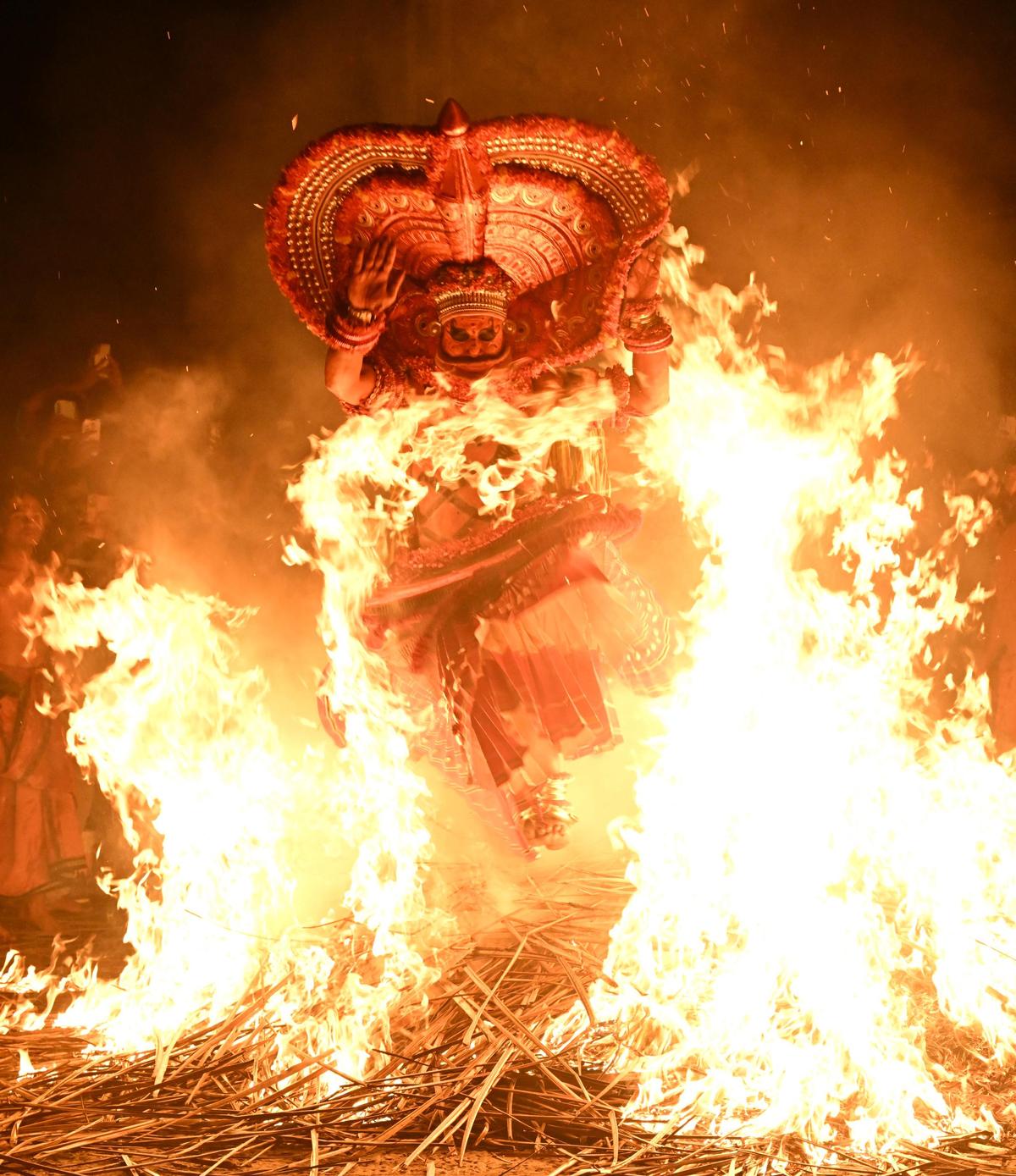
Ritualistic performances in Kerala are aplenty, such as thira and mudiyettu, and among these Theyyam has a greater visual recall for outsiders. For a long time now, stories of the theyyams have transcended geographical boundaries, attracting people from faraway lands. Theyyam performances are a regular occurrence from mid-October to early June in Northern Kerala.
The Kerala Tourism website issues a Theyyam calendar every year, which lists locations of the temples, dates of the performances and details of the contact persons. Tour companies, mostly led by people from the northern Malabar region, offer a bouquet of curated Theyyam experiences for travellers. But now, north Malabar has been pushing back against content creators disrupting the centuries-old ritual. Here are a few images that show the ritualistic art form.

Theyyam is performed only by men who morph into gods, adorning headdresses with colourful feathers and faces painted in vivid hues.
They dance around shrines to the loud beats of the Chenda and the sounds of the cymbals and bless devotees.
The sacred ritual also includes walking on fire.
Theyyam performances are an annual ritual. Performers in elaborate crimson gear blend movements of Kalaripayattu and dramatic rituals.
Theyyam being a ritualistic art form, travellers are expected to respect local customs and traditions, which now include restrictions on photography.
Each of these Theyyam performances involve rites that celebrate local lore. Though the art form is rooted in the caste system, it brings in a temporary reversal of hierarchies, with performers from historically marginalised communities.
The art form ties together the physical and metaphysical, uniting man and God, played out in an overwhelming multi-sensory experience.
Published - February 24, 2026 02:59 pm IST