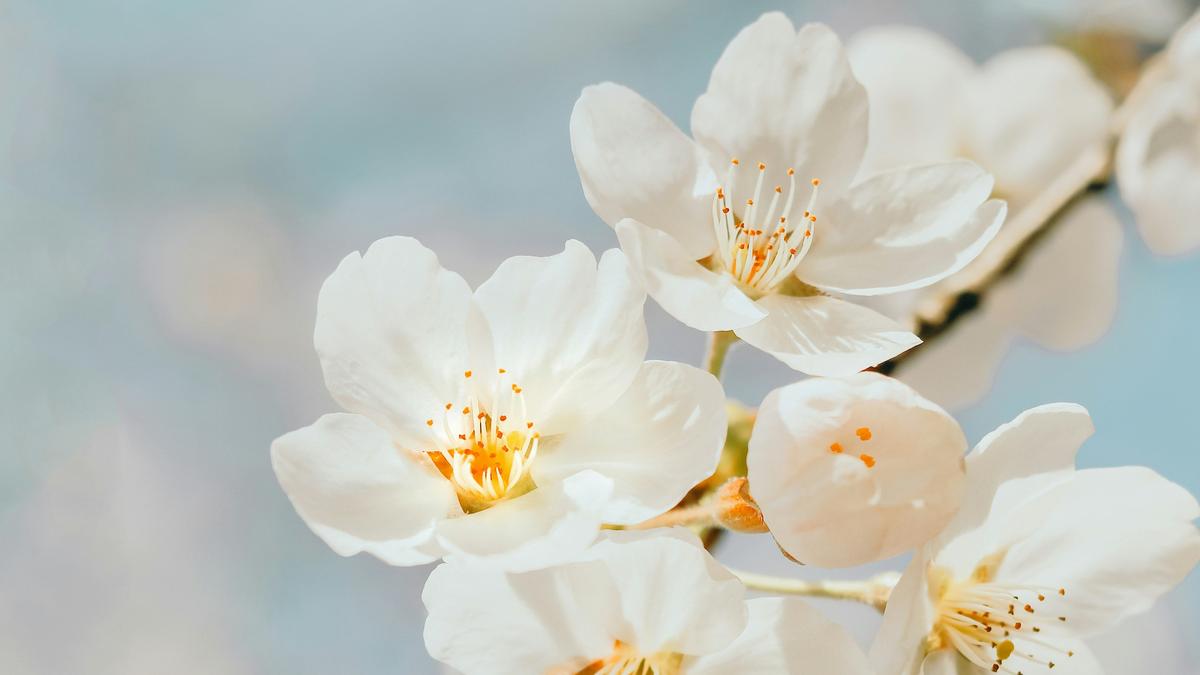
Why do so many flowers have five petals?

Published - February 25, 2026 03:30 pm IST

In the flower bud, new organs begin as small bumps on a ring of tissue, and the petal number is equal to the number of slots this tissue lays down in a whorl.

In the flower bud, new organs begin as small bumps on a ring of tissue, and the petal number is equal to the number of slots this tissue lays down in a whorl. | Photo Credit: Jei Lee/Unsplash

Ajith Kizhakkethil

Many flowers are indeed pentamerous — but across flowering plants as a whole, the petal number varies widely. Monocots often have flower parts in threes. Eudicots have four or five. Many species also have fused petals, others have several petals, and yet others lack them altogether.

In the flower bud, new organs begin as small bumps on a ring of tissue, and the eventual number is equal to the number of slots this tissue lays down in a whorl, given its size and shape and the organs’ spacing needs.

Early in the evolution of angiosperms, different major clades ‘opted’ for different numbers of slots. The monocots typically evolved three slots per whorl. The eudicots opted for four to five per whorl.

Importantly, the plant’s genes don’t control the exact number; instead they only control the dynamics of growth. For example, if the meristem — i.e. the population of undifferentiated cells that develop into new tissues per the planet’s needs — is bigger, more organs form with more parts. If an organ develops sooner, it will have more time to initiate its parts, leading to more of them. And so on.

0 / 0
Sign in to unlock member-only benefits!
  • Access 10 free stories every month
  • Save stories to read later
  • Access to comment on every story
  • Sign-up/manage your newsletter subscriptions with a single click
  • Get notified by email for early access to discounts & offers on our products
Sign in

Comments

Comments have to be in English, and in full sentences. They cannot be abusive or personal. Please abide by our community guidelines for posting your comments.

We have migrated to a new commenting platform. If you are already a registered user of The Hindu and logged in, you may continue to engage with our articles. If you do not have an account please register and login to post comments. Users can access their older comments by logging into their accounts on Vuukle.