


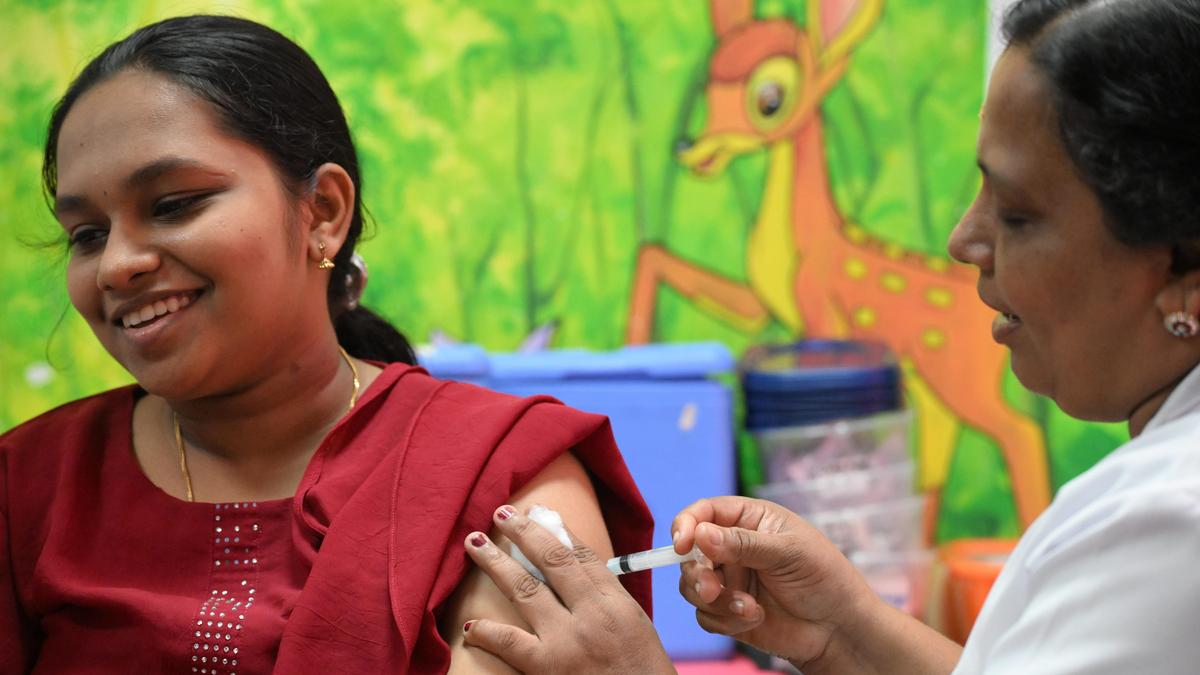
Every year, cervical cancer claims the lives of nearly 74,000 women in India. The country accounts for almost one-quarter of the global burden of this disease.
As a paediatric oncologist, I often face the difficult task of breaking devastating news to families. In many childhood cancers, we still do not know exactly why they occur or how they could have been prevented. That is why it is particularly striking that cervical cancer — one of the few cancers that is largely preventable — continues to take so many lives, often because of lack of awareness and persistent misinformation.
Here are some answers to some frequently asked questions about the Human Papillomavirus (HPV) vaccine, in the hope that better understanding can help us move closer to fully eliminating cervical cancer.
What types of HPV cause diseases and cancers?
HPV refers to a large group of more than 200 related viruses. Some types cause common infections such as warts, while others are associated with cancers.
The high-risk HPV types include strains 16, 18, 31, 33, 45, 52 and 58, which are known to cause cervical cancer and several other malignancies.
Low-risk HPV types, on the other hand, are not linked to cancer but can cause conditions such as genital warts and recurrent respiratory papillomatosis. These types may also produce mild changes in cervical cells, known as cervical intraepithelial neoplasia (CIN).
If the body clears most HPV infections naturally, why is vaccination needed?
Over a period of time, the human immune system is able to clear about 90% of HPV infections. However, since HPV is extremely common, millions of people are exposed to it during their lifetime.
Because it is extremely difficult, almost impossible, to predict who will clear the virus successfully and who will develop persistent infection, the HPV vaccination provides a dependable way to block the infection before exposure occurs.
What HPV vaccines are available in India?
Currently, two HPV vaccines are available in India.
The quadrivalent vaccine, which protects against HPV types 6 and 11 (which cause genital warts) and 16 and 18, responsible for a large number of cervical cancers.
The nonavalent (9-valent) vaccine, covers the same four types, and also protects against 31, 33, 45, 52 and 58, thus broadening the horizon of protection against cancer-causing HPV strains.
The introduction of the 9-valent vaccine allows protection against nine HPV types and can be administered to both girls and boys, making prevention more comprehensive.
Why is vaccination recommended between 9 and 14 years of age?
Vaccination during early adolescence produces a very strong immune response compared to vaccination at older ages. Studies show that children between 10 and 15 years generate antibody levels nearly twice as high as young adults.
A significant advantage is also that only two doses are required if vaccination is completed before 15 years of age. But older adolescents and adults require three doses. Early vaccination therefore ensures strong and long-lasting protection before potential exposure to the virus.
The HPV vaccine is recommended in early adolescence since it has been found to be most effective when it is administered before exposure to the virus. This approach is similar to other vaccines given in early childhood that protect against infections and diseases before any exposure occurs.
Younger adolescents are also able initiate a better immune response, which means the vaccine works more effectively and thus requires fewer doses.
What side effects can occur after receiving the HPV vaccine?
Both the quadrivalent and nonavalent HPV vaccines are considered safe and well tolerated, as has been seen so far.
However, as with any vaccine, common side effects may be felt though they are generally mild and temporary. These include: pain, redness, or swelling at the injection site; fever or fatigue; headache or nausea; muscle or joint pain.
The side effects typically resolve on their own within a short span of time.
Can HPV vaccines cause autoimmune diseases?
Large studies involving millions of individuals have been conducted and so far no consistent evidence has been found linking HPV vaccination with autoimmune diseases.
Can the HPV vaccine cause ovarian failure?
There were some concerns about ovarian failure that came about due to a few reported isolated cases, but these cases did not establish a determinative relationship with the HPV vaccine.
Early ovarian insufficiency can occur naturally in a few young women. In a study of around 200,000 women, several cases of ovarian insufficiency were identified, but none of them were associated with HPV vaccination.
If Pap smears can detect cervical cancer early, why is vaccination necessary?
Pap smears are screening tests that can only be used to detect abnormal cervical cells after changes have begun. They are not preventive mechanisms, so they cannot stop HPV infections.
HPV vaccination, however, prevents infection with the most common cancer-causing HPV types. Vaccination therefore reduces the risk of cervical cancer as well as other HPV-related cancers, including anal, vulvar, vaginal and oropharyngeal cancers.
The most effective strategy is both vaccination and regular screening.
Does a single-dose HPV vaccine improve vaccination efforts?
According to available research, a single-dose HPV vaccination schedule significantly improves vaccine coverage by reducing cost, simplifying logistics and addressing supply challenges.
India’s nationwide HPV vaccination campaign for 14-year-old girls was launched on February 28. A single-dose “Gardasil 4” vaccine, a quadrivalent HPV vaccine, will be used under the campaign. The injection provides protection against HPV types 16 and 18, which are responsible for cervical cancer, as well as types 6 and 11.
(Dr. Kriti Hegde, Consultant – Paediatric Oncology, Haemato-Oncology & Bone Marrow Transplant (BMT), Narayana Health SRCC Children’s Hospital, Mumbai.
Published - March 09, 2026 03:37 pm IST

