


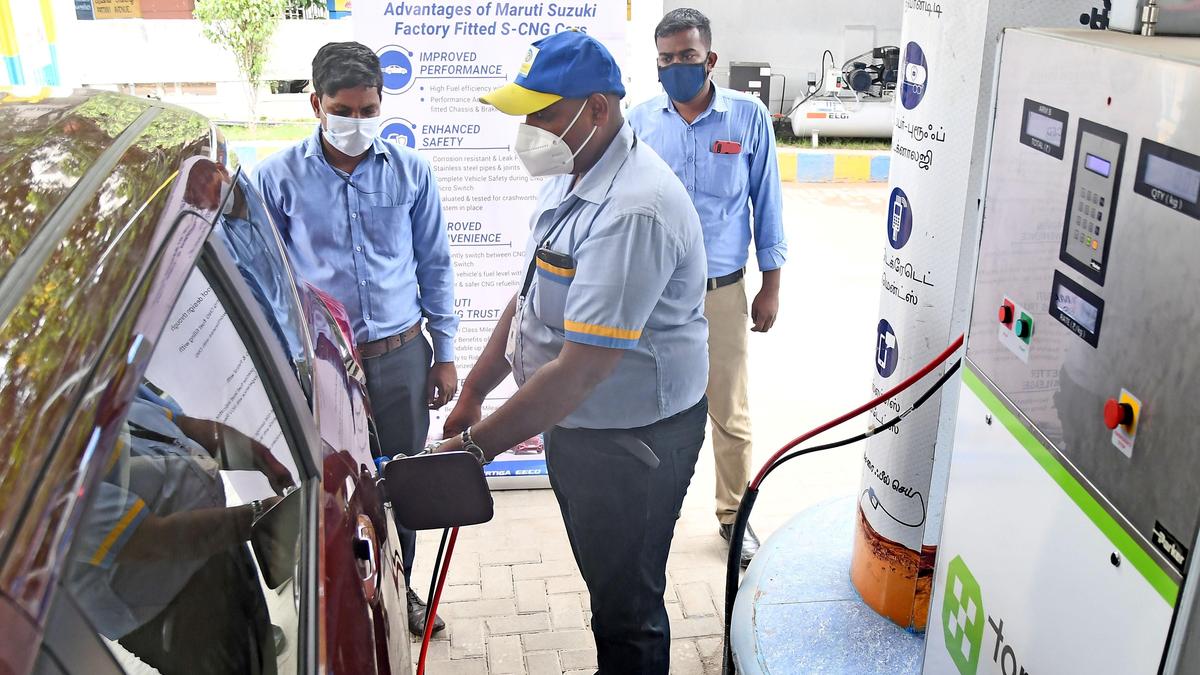
Invoking the Essential Commodities Act, 1955, the Ministry of Petroleum and Natural Gas (MoPNG) has sought diverting natural gas to certain priority sectors with a tiered structure.
In a gazette notification dated March 9, the Ministry underlined domestic piped natural gas (PNG), Compressed Natural Gas (CNG) for vehicular fuel, and Liquified Petroleum Gas (LPG) production alongside fertilizer manufacturing, tea industries, manufacturing and other industrial consumers, among the priority sectors.
The gazette underlined the priority allocation was mandated in light of disruption of LNG shipments routed through the Strait of Hormuz, and Indian suppliers obligated to invoked forced majeure because of the ongoing tensions in West Asia. At present, about 30% of India’s natural gas requirements are routed through the Strait of Hormuz.
Earlier this week, the government had invoked the Essential Commodities Act for prioritising LPG supply to domestic consumers.
Structured allocation
The gazette notification introduced tiered allocation priorities to each of these sectors. For example, domestic piped natural gas supply, CNG for transport and LPG production, among others, have been accorded for “priority allocation” with supplies to be upheld uninterrupted at “hundred per cent”, subject to operational availability. This would be premised on their average consumption from the previous six months.
Similarly, fertilizers’ plants would be supplied 70% of their consumption requirements, premised on their average consumption in the previous six months.
Further, gas marketing companies have been asked to ensure industries, manufacturing and other industrial consumers, supplied through the natural gas grid, receive eighty per cent of their requirements under the structure. Additionally, CGDs have been asked to ensure industrial and commercial consumers also receive the same supply.
The gazette further states that the redistribution would be facilitated through “full or partial curtailment” of gas being supplied to ONGC Petrol additions Limited, GAIL Pata Petrochemical and Reliance O2C, among others. “The oil refining companies shall absorb the impact of LNG supply disruption to the extent feasible by reducing gas allocation to refineries to approximately sixty five per cent. of the past six months' gas consumption, subject to operational feasibility,” the gazette read.
India’s natural gas consumption at present is 195 million metric standard cubic metres per day (MMSCMD), of which it imports half of its requirements.
Fertiliser Ministry welcomes the move
The Fertilisers’ Ministry held the decision was reflective of the government according highest priority to meeting the needs of the farmers. “Proactive preparations have been initiated to ensure that political instability in West Asia does not adversely impact the upcoming Kharif sowing season in India,” their statement read.
It further informed that a high-level meeting in this regard, with senior officials from the Ministry of Petroleum and Natural Gas (MoPNG) also present, was held on Tuesday (March 10, 2026). “High-ranking officials from all fertilizer companies participated in the meeting and presented a detailed account of their preparations and challenges to the Department. On behalf of the Department, all companies were instructed that every possible effort is being made to keep fertilizer plants running continuously,” the Fertiliser Ministry informed.
Published - March 10, 2026 01:34 pm IST

