


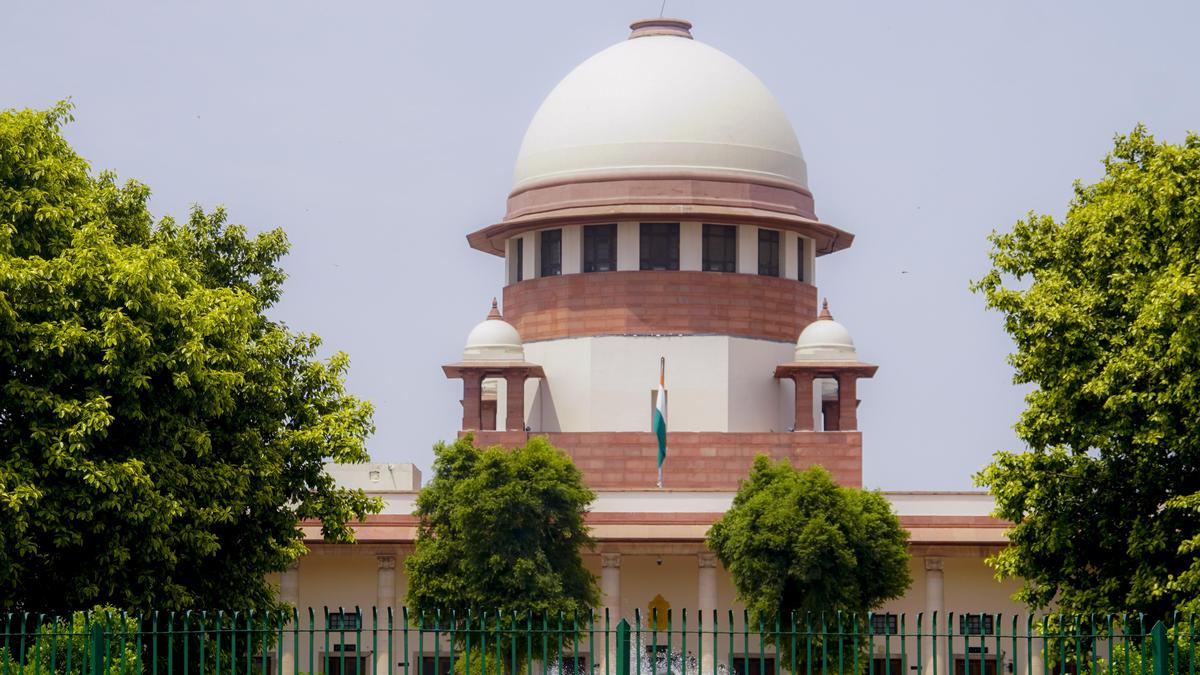
The Supreme Court on Friday (March 13, 2026) refused to direct the government to compulsorily conduct “expensive” Nucleic Acid Tests (NAT) to identify diseases ahead of blood transfusions, saying that it does not have specialised knowledge about either medical science or the costs involved.
A Bench headed by Chief Justice of India Surya Kant pointed out that States have their financial limitations, and the judges cannot “pretend to understand medical science” to pass judicial orders making NAT mandatory.
The Bench gave the petitioner — the Sarvesham Mangalam Foundation, represented by advocate A. Velan —liberty to make comprehensive representations to the Health Secretaries of States, “who may, with the aid and advice of domain experts, take appropriate decisions” on the issue.
‘No ulterior motives’
The hearing saw the court repeatedly question the intentions of the NGO in filing the petition. At one point, the Bench asked Mr. Velan, “Do you think PILs are not funded from abroad, do you think so?”
Mr. Velan responded that the petitioner had no ulterior motives, and had only sought to highlight the case of thalassemia patients who require frequent blood transfusion and were vulnerable to the transfusion of infected blood. The petition described such medical mishaps as “preventable tragedies”.
Invoking right to life
NAT is a highly sensitive molecular technique that detects the genetic material of viruses like HIV, Hepatitis B, and Hepatitis C in the blood. In a previous hearing, the court had asked the petitioner to provide more details about the cost-effectiveness of NAT compared to the more commonly used Enzyme-Linked Immunosorbent Assay (ELISA) test. The Chief Justice had questioned if all the States could afford NAT in government blood banks and hospitals.
The petitioner had argued that the right to safe blood transfusion was a fundamental part of the right to life under Article 21 of the Constitution.
The case had gained significance in the context of at least six children reported to be HIV positive in Madhya Pradesh’s Satna allegedly due to contaminated blood transfusions at the district hospital during treatment for thalassaemia in December 2025.
Published - March 13, 2026 09:56 pm IST

