


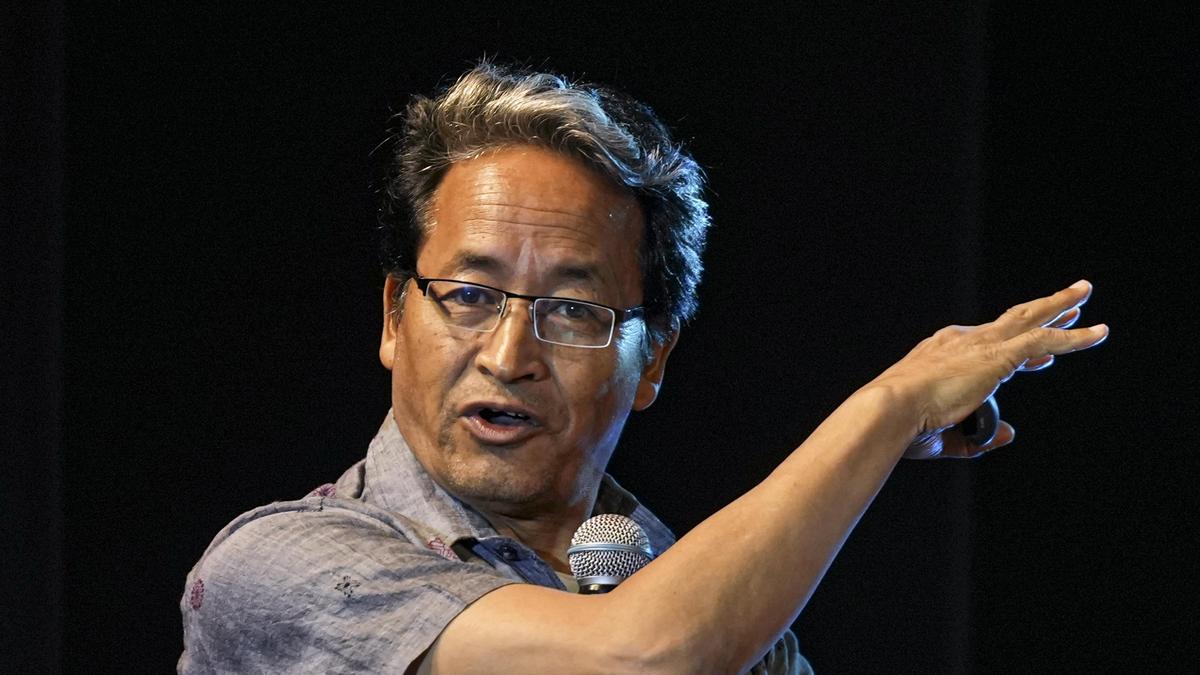
Ladakhi activist Sonam Wangchuk was released from Jodhpur Central Jail on Saturday (March 14, 2026), after the Union Ministry of Home Affairs (MHA) revoked with “immediate effect” his 170-day detention under the National Security Act (NSA).
Sonam Wangchuk | Ladakh’s engineer of change
Invoking its powers under Section 14 of the stringent Act, the MHA revoked the Leh district magistrate’s order through which Mr. Wangchuk has been detained since September 26, 2025. He has “already undergone nearly half of the period of detention” under the NSA, the Ministry said.
The MHA is not known to have exercised this provision for any detainee in the past.
The 1980 Act enables detention of an individual for up to a year, based on executive orders and without a trial in a court of law, on the grounds that the person poses a threat to national security or to prevent them from disrupting public order.
‘Not stepping away from activism’
The release comes ahead of the Supreme Court hearing next week on a petition filed by Mr. Wangchuk’s wife, Gitanjali J. Angmo challenging the NSA order, and two days before a protest called by civil society groups in Leh and Kargil to demand constitutional safeguards for the Union Territory. The Leh Apex Body (LAB) and the Kargil Democratic Alliance (KDA) have decided to go ahead with the March 16 protest.
In an interview with The Hindu on March 9, Ms. Angmo had said that Mr. Wangchuk would not pursue the path of agitation after his release but will continue to be part of the movement to demand constitutional safeguards for Ladakh through discussion and dialogue.
Reacting to his wife’s statement, Mr. Wangchuk conveyed through one of his social media accounts on March 12 that he has not stepped away from activism but added that it would require “clarity, unity, and sincere dialogue.”
Mr. Wanchuk was best known as a climate activist before he took up the cause of Statehood for Ladakh. Ms Angmo is the co-founder of the Himalayan Institute of Alternative Learning (HIAL) in Ladakh.
‘No space for agitation in Ladakh’
The newly appointed Lieutenant Governor of Ladakh Vinai Kumar Saxena, welcomed the decision but added that “there is no space for agitation and violence in Ladakh and all issues pertaining to the aspirations and concerns of the people would be addressed through dialogue with various stakeholders, community leaders and citizens.”
The MHA said in a statement on Saturday that the government remains committed to fostering an environment of peace, stability, and mutual trust in Ladakh so as to facilitate constructive and meaningful dialogue with all stakeholders. In furtherance of this objective, the NSA order against Mr. Wangchuk is being revoked, the MHA said.
It added that Mr. Wangchuk had been detained under the NHA with a view to maintaining public order, against the backdrop of the serious law and order situation that arose in the peace-loving town of Leh on September 24, 2025. Mr. Wangchuk and 15 others were on the 15th day of a 35-day hunger strike when violence erupted in Leh city. At least four people, including a Kargil war veteran, were killed in police firing, and 160 others were injured. This had been Mr. Wanchuk’s fifth hunger strike over the past five years to draw the government’s attention to the demands of constitutional safeguards for the region.
‘Protests detrimental to peace’
“The Government has been actively engaging with various stakeholders and community leaders in Ladakh with a view to addressing the aspirations and concerns of the people of the region. However, the prevailing atmosphere of bandhs and protests has been detrimental to the peace-loving character of the society and has adversely affected various sections of the community, including students, job aspirants, businesses, tour operators and tourists and the overall economy,” the Ministry said.
It reiterated the Union government’s commitment to providing all necessary safeguards for Ladakh. It remained hopeful that the issues concerning the region would be resolved through constructive engagement and dialogue, including through the mechanism of the High-Powered Committee (HPC) as well as other appropriate platforms.
Published - March 14, 2026 12:21 pm IST

