Sri Lanka announces 4-day week for public sector to cut fuel use

Those employed in essential services, including the health sector, ports, water supply and customs departments, will function all days

Published - March 16, 2026 09:22 pm IST - COLOMBO

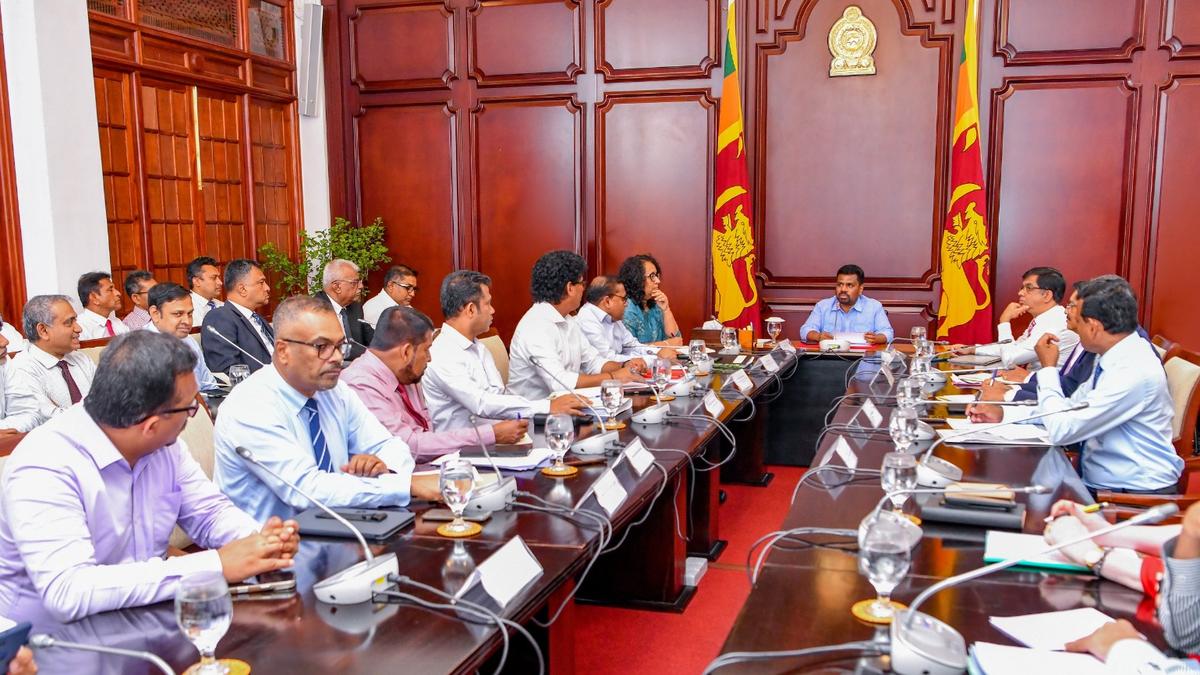
A meeting convened by Sri Lankan President Anura Kumara Dissanayake to discuss responses to a possible fuel crisis and maintenance of essential services in Sri Lanka, on March 16, 2026. Photo: Special Arrangement.

A meeting convened by Sri Lankan President Anura Kumara Dissanayake to discuss responses to a possible fuel crisis and maintenance of essential services in Sri Lanka, on March 16, 2026. Photo: Special Arrangement.

Sri Lanka on Monday (March 16, 2026) announced a four-day working week — declaring Wednesdays off — for government institutions, schools, and universities, to conserve fuel as the escalating tensions in West Asia threaten a severe energy crisis.

Addressing a media conference in Colombo, the Commissioner General of Essential Services also encouraged the private sector to consider the option as the island nation, like many others, braces for possible fuel shortages. All government functions will be put on hold temporarily, officials said.

However, those employed in essential services, including the health sector, ports, water supply and customs departments, will function all days.

The announcement came a day after the government switched to a QR code-aided digital system to ration retail fuel sales, limiting weekly quotas to consumers according to the vehicle they use.

0 / 0
Sign in to unlock member-only benefits!
  • Access 10 free stories every month
  • Save stories to read later
  • Access to comment on every story
  • Sign-up/manage your newsletter subscriptions with a single click
  • Get notified by email for early access to discounts & offers on our products
Sign in

Comments

Comments have to be in English, and in full sentences. They cannot be abusive or personal. Please abide by our community guidelines for posting your comments.

We have migrated to a new commenting platform. If you are already a registered user of The Hindu and logged in, you may continue to engage with our articles. If you do not have an account please register and login to post comments. Users can access their older comments by logging into their accounts on Vuukle.